Tree and Shrub Planting Tips for First Year Success
Soil Amendments
At the time of planting, using soil amendment products increases the chances of a plant’s survival in poor or heavy soil. Here are some of the Soil Amendments we carry at The Greenhouse Nursery:
Millers Soil Prep (Local Business):
- OMRI listed for organic use
- Made from composted forest materials and steer manure
- Composted organics improve soil structure to aid in water retention and drainage with the added benefit of nourishing the plant.
- This product may also be used as mulch in vegetable gardens and flower beds to aid in water retention and reduce weed infestations.
Mix with native soil in a 1:3 ratio (1 part amendment to 3 parts native) and use amended mixture to backfill the hole once you have placed your plant. The mixture will help ease your plant’s introduction into new soil and improve soil structure to better support your plant through the establishment period.
Circle Soil Biochar (Based in Salt Lake):
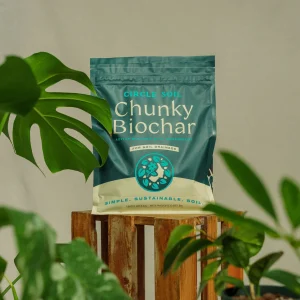
- Adds aeration and drainage
- Acts as a reservoir for water use when needed
- Provides nutrients for plant life
- Reduces acidity of the soil
- Moisture wicking effect to prevent root rot
- Purifies soil by filtering out pollutants
- Promotes beneficial microbial activity
- Safely locks carbon in the soil rather than releasing it harmfully into the atmosphere
This biochar is created from wildfire mitigation wood waste in Utah that is superheated, without oxygen, producing a nutrient rich soil amendment. As a soil amendment for tree and shrub planting, you may mix in a biochar amount that is equivalent to 10% of the native backfill soil. This stable form of nutrient dense carbon will provide its benefits in the soil for hundreds to thousands of years.
Compost:
- Improves soil structure
- Aids in aeration and drainage of heavy, clay soils
- Improves water retention in sandy soil
- Provides slow release nutrients for better absorption
- Can be used as mulch if made up of bulkier woody material
- Made from recycled organic matter
- Reduces soil erosion
- Filters pollutants
Well decomposed composts (similar particle size to soil) can be used as a soil amendment for garden beds as well as trees and shrubs. For garden beds mix 1 inch of compost into the native soil and till 2 inches deep. For trees and shrubs you can follow a 1:3 ratio (1 part amendment to 3 parts native soil) mixing well and using the amended soil to backfill the hole you planted.
Fertilizers:
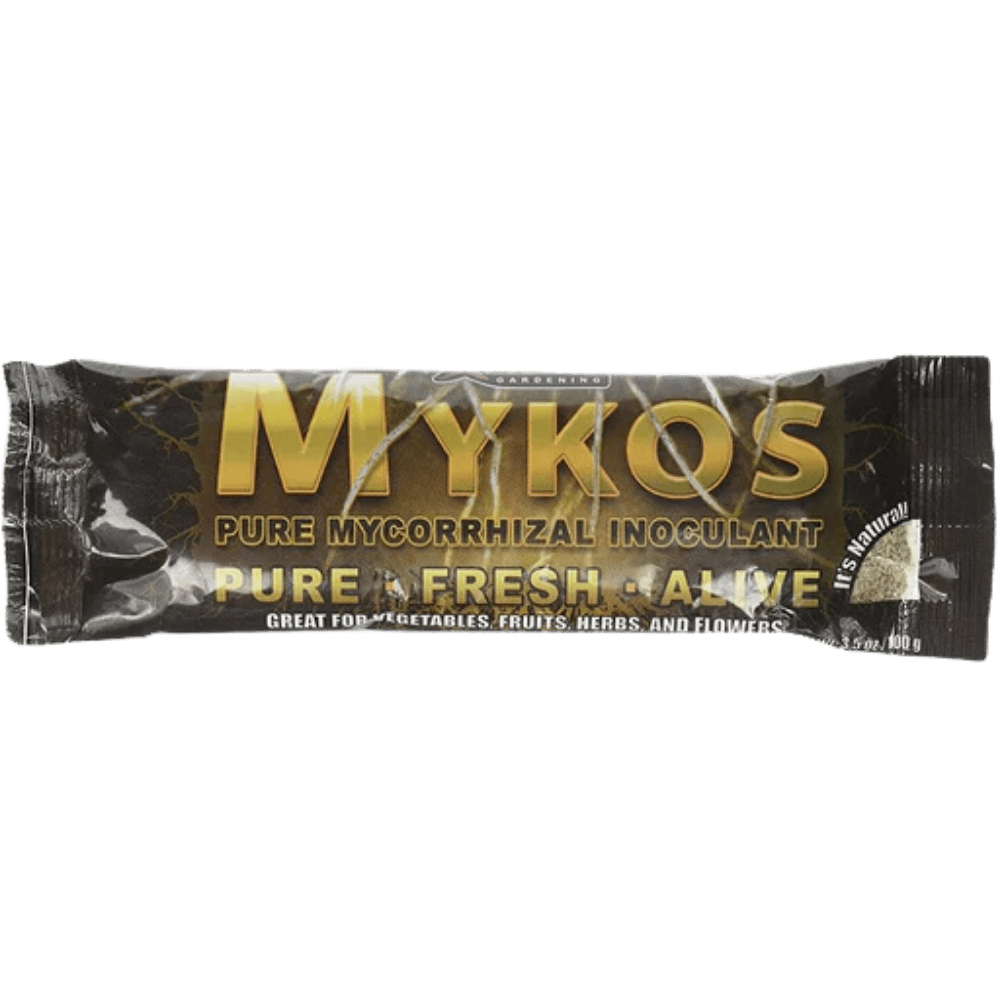
Mykos Mycorrhizae:
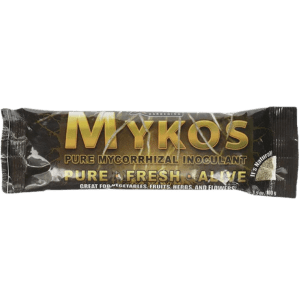
- OMRI listed for organic use
- Increases nutrient and water uptake
- Stimulates root growth
- Protects roots against harmful pathogens
- Improves structure of clay soil and sandy soil
- Helps break down organic compounds and convert them into plant food
Mycorrhizae is a beneficial soil fungi that forms a symbiotic relationship with plant life. It helps stimulate root growth and connects with other mycorrhizae networks to source nutrients from farther distances. This allows plants to have more stable access to nutrients. In addition, Mycorrhizae acts as an extra, defensive barrier to root systems, protecting them from pathogens. Mykos Mycorrhizal Inoculant can be used in the following doses as a fertilizer:
| 1-3 gallon container |
1-2 tbsp |
| 5-7 gallon container |
4-6 tbsp |
| 10-20 gallon container |
½ cup |
| 25-50 gallon container |
1 cup |
| 100 gallon container |
2 cups |
Fall Tips:
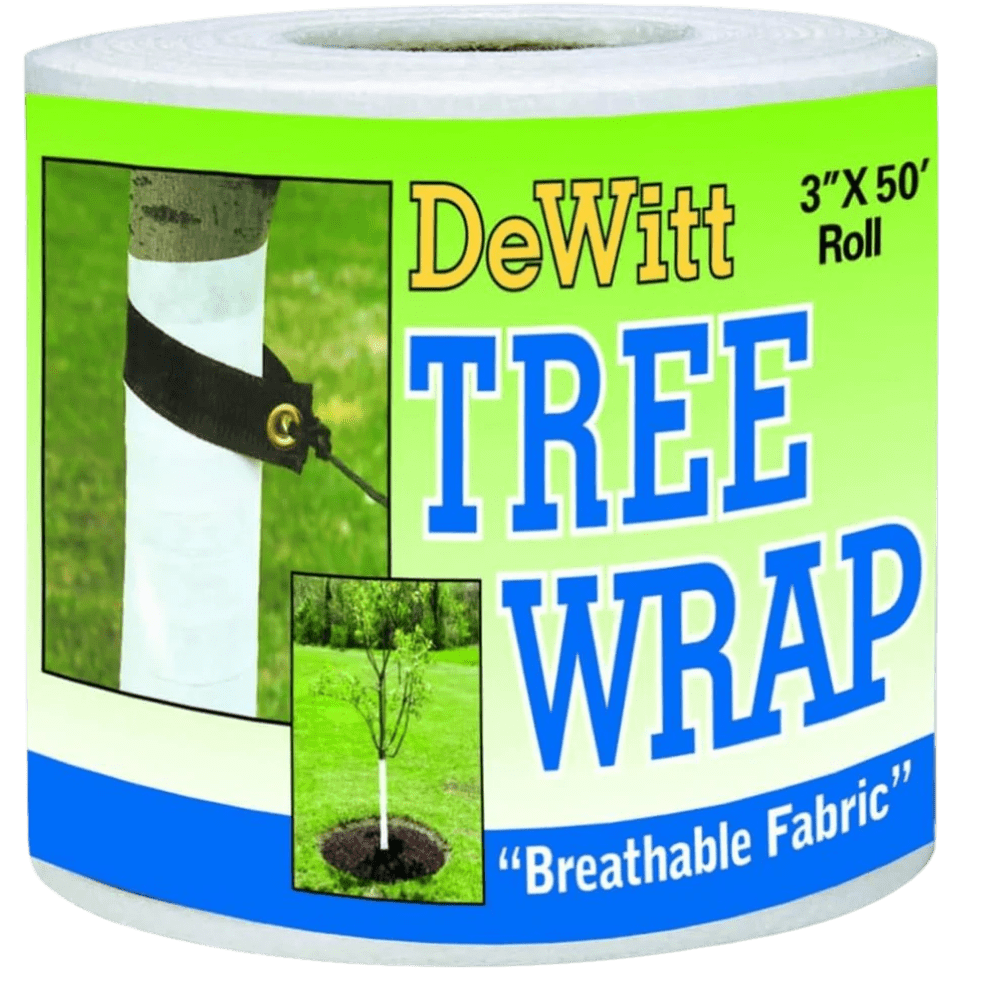
DeWitt Tree Wrap
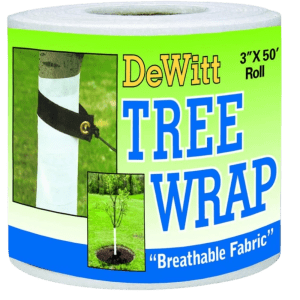
Tree wrap is a great way to protect your trees from sunscald as well as trimmer and mower damage.
Sunscald presents as scorch marks or cracking in the bark, commonly caused by the sun reflecting off of snow. This causes it to be commonly seen in Utah winters due to heavy snow accumulation paired with sunny days.
Any damage to trees can be a gateway for parasites and disease. Tree wrap helps prevent this by reflecting the sunlight away from the bark of the tree. It is made from breathable fabric that slowly photodegrades to keep it from girdling the trunk.
To install tree wrap, start by wrapping the base of the trunk once and tying in the end. Then, continue wrapping up the tree, overlapping each layer by about 1 inch. When you reach the base of the lowest branch, cut the wrap from the roll, and tuck the end into the last 2 layers of material that you wrapped. It is best to apply tree wrap in the late fall, before the first hard frost, and to remove it in the spring after the last hard frost. *TREE WRAP IS FOR WINTER OR TEMPORARY USE ONLY*
“DeWitt Tree Wrap protects trees from scorching, and from trimmer and mower damage. Tree Wrap is made of polypropylene fabric and easily conforms to fit any tree shape or bark texture. Tree Wrap slowly photodegrades to prevent girdling of the tree’s trunk. This product is approved by leading universities and horticulturalists.”
Spring Tips
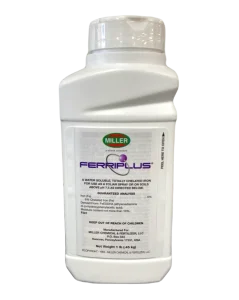
Ferriplus Chelated Iron
Chelated iron fertilizers are a simple way to treat iron chlorosis. Iron chlorosis is prominent in Utah due the high alkaline soil which does not provide a lot of readily available iron. Chelated iron is specially formulated to be bioavailable to plant life so that it is easily absorbed and utilized.
Ferriplus Chelated Iron comes in a concentrated powdered formula that must be diluted in water according to the dosages on the package. One diluted, it can be used to water around the affected plants to increase their iron intake.
Commonly Afflicted Trees and Shrubs:
- Autumn Blaze Maple
- Silver Maple
- Red Maple
- River Birch
- Some Berries
- Rose of Sharon
- 👉 USU EXTENSION LINK
 Skip to content